
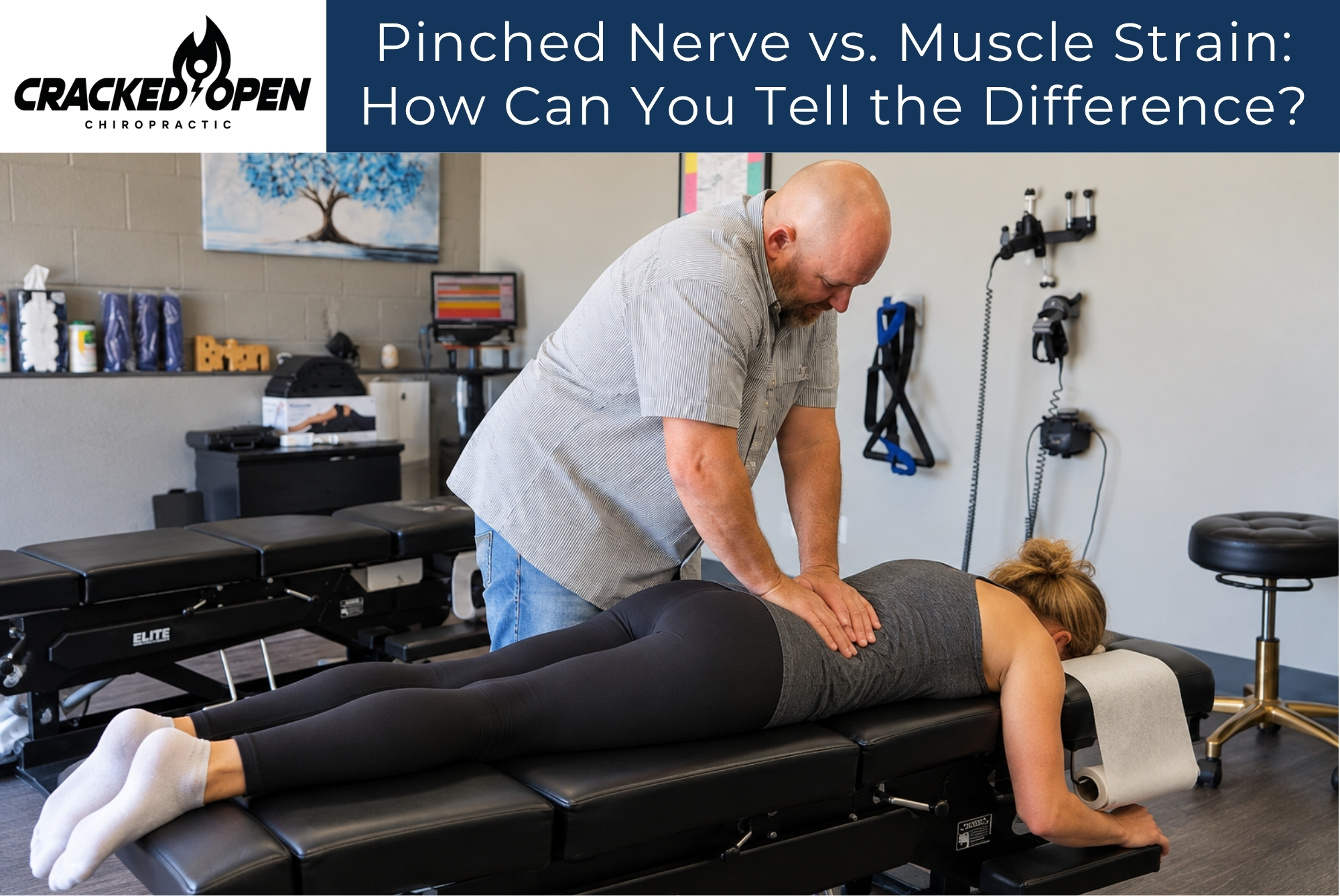
 You wake up with pain in your neck. Your lower back suddenly hurts after lifting something heavy. Or maybe you’ve developed an uncomfortable sensation that travels into your arm or leg. Is it simply a strained muscle, or could a pinched nerve be responsible?
Although pinched nerves and muscle strains can both cause pain and interfere with everyday activities, they affect different structures of the body and may produce different symptoms.
At Cracked Open Chiropractic in Longmont, CO, evaluating the source of your symptoms is an important first step toward determining an appropriate treatment plan.
What Is a Pinched Nerve?
A pinched or compressed nerve occurs when surrounding tissues place excessive pressure on a nerve. Depending on where the affected nerve is located, symptoms may remain near the problem area or travel into another part of the body.
For example, irritation involving a nerve in the neck may cause symptoms that extend into the shoulder, arm, or hand. A nerve affected in the lower back may produce symptoms that travel into the buttock or leg.
Common symptoms associated with nerve irritation or compression can include:
- Sharp or burning pain
- Pain that travels along an arm or leg
- Numbness
- Tingling or a “pins and needles” sensation
- Changes in sensation
- Muscle weakness
The exact symptoms depend on which nerve is involved and the underlying cause.
What Is a Muscle Strain?
A muscle strain occurs when muscle fibers are overstretched or injured. A strain can happen suddenly or develop gradually through repetitive use.
Muscle strains commonly occur after:
- Lifting something improperly
- Exercising or playing sports
- Sudden twisting or reaching
- Repetitive physical activities
- Overworking a muscle
- Performing an unfamiliar activity
- Working in an awkward position
A strained muscle may feel sore, tight, tender, or painful when you use it.
What Does a Muscle Strain Feel Like?
Muscle strain symptoms are often concentrated around the injured muscle.
You may experience:
- Aching or soreness
- Muscle tightness
- Tenderness when touching the area
- Pain with certain movements
- Muscle spasms
- Reduced range of motion
- Swelling or bruising with some injuries
Unlike nerve-related symptoms, an uncomplicated muscle strain is less likely to cause numbness or tingling extending into the hands or feet.
What Does a Pinched Nerve Feel Like?
One of the biggest clues that a nerve may be involved is the type and location of your symptoms.
Instead of remaining in one localized area, nerve-related discomfort can sometimes follow a path.
For example, you might experience neck discomfort accompanied by tingling in an arm or hand. Lower back symptoms may occur along with burning, numbness, tingling, or pain traveling into a leg.
However, symptoms alone cannot always determine whether you have a pinched nerve. Several musculoskeletal conditions can cause similar problems, which is why an evaluation may be necessary.
Can a Pinched Nerve Cause Numbness and Tingling?
Yes. Numbness and tingling are symptoms commonly associated with nerve irritation or compression.
If you’re experiencing persistent “pins and needles,” burning sensations, numbness, or changes in sensation in your arms, hands, legs, or feet, it is important to determine what may be affecting the nerve.
Persistent neurological symptoms should not simply be assumed to be a tight muscle.
Can a Muscle Strain Cause Sharp Pain?
Yes. Muscle injuries can sometimes produce sharp pain, particularly when you move, stretch, or contract the injured muscle.
That is one reason it can be difficult to distinguish a strain from other musculoskeletal problems based solely on whether your pain feels dull or sharp.
The location of the symptoms, how the injury occurred, which movements aggravate it, and whether neurological symptoms are present can provide additional clues.
What Causes a Pinched Nerve?
Nerves can become irritated or compressed for several reasons.
Potential contributing factors can include:
- Disc-related problems
- Inflammation around surrounding tissues
- Degenerative changes
- Repetitive movements
- Certain injuries
- Carpal tunnel syndrome
- Changes that reduce the available space around a nerve
Identifying the underlying cause is important because treating symptoms without understanding why they are occurring may not address the actual problem.
Can Sitting Too Long Irritate a Nerve?
Prolonged sitting can aggravate certain neck and lower back problems, particularly when combined with poor posture or limited movement.
For people who spend much of the day working at a computer or driving, repetitive postures may also contribute to muscle tension and musculoskeletal discomfort.
Regular movement, appropriate workstation ergonomics, and addressing underlying mobility problems may help reduce unnecessary physical stress.
How Is a Pinched Nerve Diagnosed?
Determining whether symptoms are coming from a nerve, muscle, joint, disc, or another structure typically begins with a detailed history and physical examination.
Your provider may evaluate factors such as:
- Where your pain occurs
- Whether symptoms travel
- Muscle strength
- Sensation
- Range of motion
- Joint mobility
- Movements that increase or decrease symptoms
- Previous injuries
- Daily activities and work demands
Diagnostic imaging may be appropriate in certain cases depending on the symptoms and examination findings.
Can Chiropractic Care Help With a Pinched Nerve?
The appropriate treatment depends on what is causing the nerve irritation.
At Cracked Open Chiropractic, pinched nerves are among the conditions evaluated and treated at the Longmont practice. Depending on the patient’s condition, treatment recommendations may incorporate chiropractic care and other conservative therapies offered by the practice.
The goal is to identify factors contributing to the symptoms and create an individualized plan based on the patient’s examination findings and needs.
Can Chiropractic Care Help a Muscle Strain?
Chiropractic care may also be incorporated into the management of certain musculoskeletal strains, particularly when an injury affects normal movement or occurs alongside joint restrictions and muscle tightness.
Cracked Open Chiropractic provides care for repetitive and acute trauma involving muscles, tendons, ligaments, joints, nerves, and connective tissues.
Depending on the injury, an individualized treatment plan may incorporate chiropractic adjustments, soft tissue techniques, corrective exercises, and other supportive therapies.
How Long Does a Muscle Strain Take to Heal?
Recovery time varies significantly depending on the location and severity of the injury, your overall health, activity level, and whether the affected tissue continues to be stressed.
A mild strain may improve relatively quickly, while a more significant injury can require a longer recovery period.
Continuing to perform activities that repeatedly aggravate the injured area can also delay recovery.
When Should I Have My Pain Evaluated?
Consider scheduling an evaluation when symptoms:
- Persist or repeatedly return
- Become progressively worse
- Interfere with work or sleep
- Limit your normal activities
- Travel into an arm or leg
- Include persistent numbness or tingling
- Are accompanied by noticeable weakness
Seek prompt medical attention for significant or rapidly worsening weakness, loss of bowel or bladder control, numbness around the groin or saddle region, major trauma, or other severe or concerning symptoms.
Frequently Asked Questions About Pinched Nerves and Muscle Strains
How Can I Tell if My Pain Is From a Nerve or a Muscle?
Muscle pain is often localized and may be associated with tenderness, tightness, or pain during specific movements. Nerve problems are more likely to produce radiating pain, numbness, tingling, burning, or weakness. However, symptoms can overlap, so an examination may be needed for an accurate diagnosis.
Can You Have a Muscle Strain and a Pinched Nerve at the Same Time?
It is possible for multiple structures to contribute to symptoms simultaneously. Muscle tension, inflammation, joint problems, and nerve irritation can sometimes occur together, particularly following an injury.
Does Tingling Always Mean I Have a Pinched Nerve?
No. Tingling can have several possible causes. Persistent, recurring, or worsening tingling should be evaluated rather than self-diagnosed.
Can a Pinched Nerve Cause Muscle Weakness?
Nerve compression or irritation can sometimes affect the muscles supplied by that nerve. New or worsening weakness warrants medical evaluation.
Should I Stretch a Pinched Nerve?
Not every stretch is appropriate for every condition. Some movements may help while others may aggravate symptoms. It is best to determine what is causing your symptoms before aggressively stretching a painful area.
Should I Use Heat or Ice for a Muscle Strain?
The appropriate choice can depend on the injury, timing, symptoms, and individual circumstances. Your healthcare provider can recommend an approach appropriate for your particular condition.
Can a Pinched Nerve Go Away on Its Own?
Some mild cases of nerve irritation improve with time and appropriate activity modification. Persistent, worsening, or recurring symptoms should be evaluated to identify the underlying cause.
When Should I See a Chiropractor for a Pinched Nerve?
If pain, numbness, tingling, or other symptoms persist, recur, or interfere with your normal activities, an evaluation can help determine whether a musculoskeletal problem is contributing to the nerve irritation and whether chiropractic care is appropriate.
Pinched Nerve and Muscle Pain Care in Longmont, CO
It can be difficult to determine on your own whether persistent pain is coming from a muscle, nerve, joint, disc, or a combination of structures.
At Cracked Open Chiropractic in Longmont, Colorado, patients receive an evaluation designed to identify the source of their symptoms and determine an individualized approach to care.
If you’re experiencing persistent pain, numbness, tingling, stiffness, or limited mobility, schedule an appointment to learn more about your treatment options.
Contact Information
Cracked Open Chiropractic
1823 Sunset Place, Ste F
Longmont, CO 80501
Phone: (303) 776-6596
Website: crackedopenchiropractic.com
Book An Appointment: crackedopenchiropractic.com/appointments/