
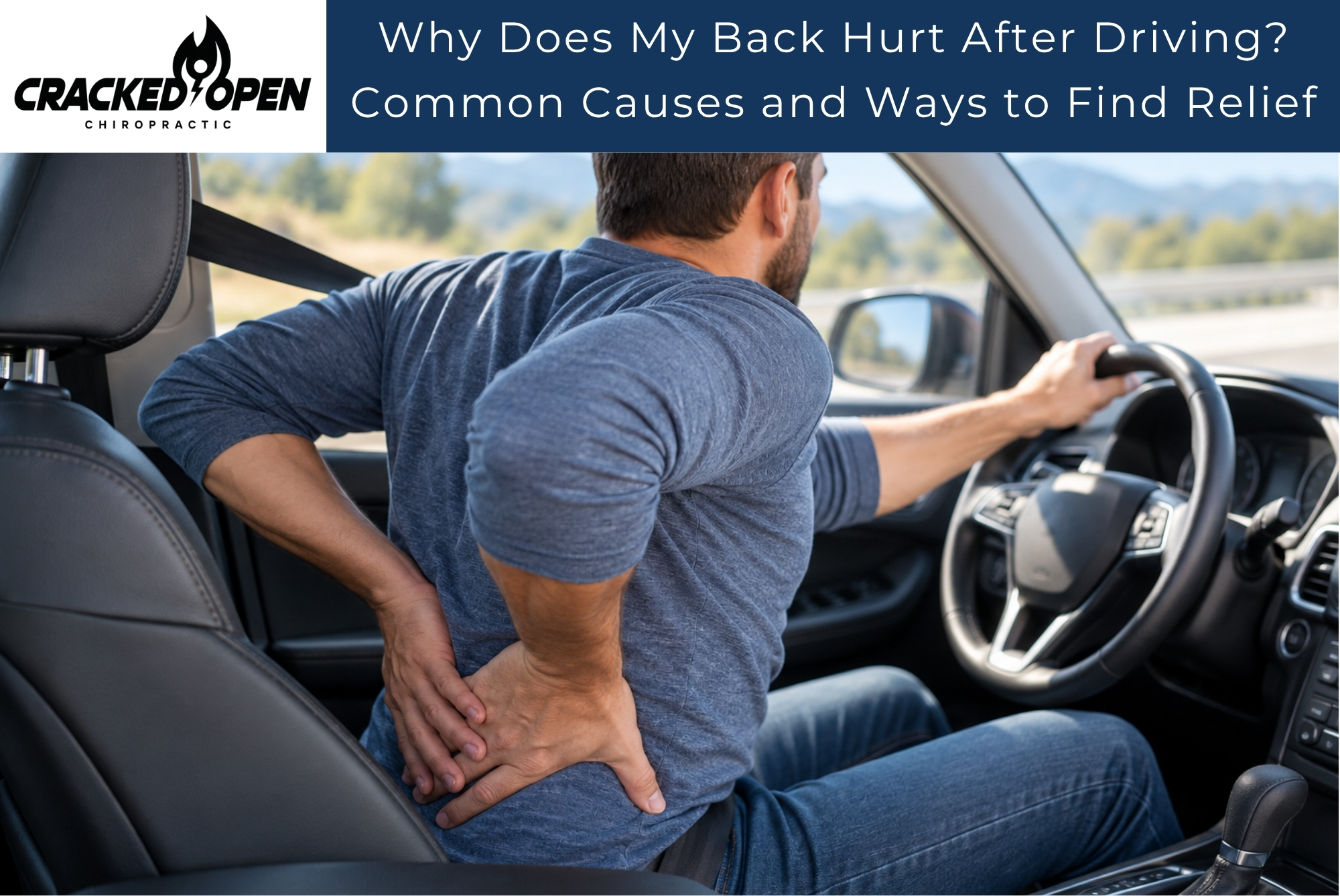
Whether you’re commuting to work, running errands around Longmont, or heading out on a Colorado road trip, spending extended time behind the wheel can leave your back feeling stiff, sore, or painful. For some people, the discomfort begins while driving. For others, the pain becomes noticeable when they finally step out of the car.
Driving combines prolonged sitting with limited movement and a relatively fixed posture. If you already have tight muscles, reduced mobility, or an underlying back problem, time behind the wheel may make your symptoms more noticeable.
At Cracked Open Chiropractic in Longmont, CO, patients experiencing recurring back pain can be evaluated to determine what may be contributing to their symptoms and which conservative treatment options may be appropriate.
Why Does Driving Make My Back Hurt?
Driving requires your body to remain in a seated position while your arms and legs operate the vehicle. Unlike sitting in a regular chair, you cannot freely change positions or get up whenever you begin to feel uncomfortable.
Several factors may contribute to back pain while driving, including:
- Prolonged sitting
- Poor driving posture
- Inadequate lumbar support
- Tight hip muscles
- Muscle fatigue
- Limited spinal mobility
- Seat position
- Repetitive commuting
- Previous injuries
- Disc or nerve-related conditions
Often, more than one factor is involved.
Can Sitting Too Long Cause Lower Back Pain?
Long periods of sitting can contribute to stiffness and discomfort, particularly when you remain in essentially the same position for an extended time.
Your lower back, hips, and surrounding muscles may become stiff or fatigued. If you regularly commute long distances or drive professionally, those hours can add up quickly.
Changing positions and moving periodically can help prevent the body from remaining static for too long.
Could My Driving Posture Be Causing Back Pain?
Your position behind the wheel can influence how stress is distributed throughout your body.
Drivers sometimes lean forward, round their shoulders, slouch, or sit too far from the steering wheel. Others may keep a wallet or another bulky object in a back pocket, creating an uneven sitting position.
While there is no single perfect driving posture for everyone, your seat should allow you to operate the vehicle comfortably without constantly reaching, leaning, or twisting.
How Should I Adjust My Car Seat to Reduce Back Strain?
Start by making sure you can comfortably reach the pedals and steering wheel without stretching.
Your back should be adequately supported by the seat, and your headrest should be positioned appropriately. Avoid reclining so far that you have to reach forward to steer.
If your vehicle’s built-in lumbar support is adjustable, experiment with the setting to find a comfortable position that supports the natural contour of your lower back without forcing you excessively forward.
The goal is a comfortable, supported position rather than maintaining a rigid posture throughout the entire drive.
Why Does My Back Hurt When I Get Out of the Car?
Have you ever felt relatively comfortable while driving only to experience stiffness or pain as soon as you stand?
After remaining seated, your hips, lower back, and surrounding muscles must suddenly transition into standing and walking. Areas that have been relatively stationary are now required to move and support your body differently.
If you regularly feel stiff when getting out of your vehicle but improve after walking around, prolonged inactivity may be one contributing factor.
Persistent or worsening pain deserves further evaluation.
Can Tight Hips Cause Back Pain While Driving?
Your hips and lower back work closely together.
Sitting keeps your hips in a flexed position for prolonged periods. Over time, some people develop tightness or reduced mobility around the hips, particularly if they also spend much of the workday sitting.
When hip mobility is limited, surrounding areas may compensate during standing, walking, bending, and other activities.
An individualized assessment can help identify whether hip mobility is contributing to your back discomfort.
Can Driving Aggravate a Herniated or Bulging Disc?
Certain people with disc-related conditions find prolonged sitting uncomfortable.
A bulging or herniated disc may or may not cause symptoms. When nearby tissues or nerves are affected, symptoms can include lower back pain as well as discomfort that travels into the buttock or leg.
If driving consistently worsens diagnosed disc-related symptoms, discuss the problem with your healthcare provider.
Why Does Pain Travel Down My Leg When I Drive?
Pain that begins around the lower back or buttock and travels into the leg may indicate nerve involvement.
Sciatica is one potential cause. It describes symptoms associated with irritation or compression involving the sciatic nerve or contributing nerve roots.
In addition to pain, symptoms may include:
- Burning
- Tingling
- Numbness
- Pins and needles
- Weakness
Not all leg pain is sciatica, so recurring radiating symptoms should be evaluated rather than self-diagnosed.
Can Driving Cause a Pinched Nerve?
Driving itself does not necessarily cause a pinched nerve, but prolonged sitting and certain positions may aggravate an existing nerve-related condition.
If you experience recurring numbness, tingling, burning, or radiating pain while driving, an evaluation can help determine whether a nerve may be involved and where the irritation is occurring.
What Can I Do Before a Long Drive?
Preparing for a long drive can be as important as what you do once you’re behind the wheel.
Before leaving, consider spending a few minutes walking and gently moving your body rather than transitioning directly from prolonged sitting at home or work into several more hours of sitting in the car.
Make sure your seat, mirrors, and steering wheel are positioned comfortably before starting your trip so you do not have to maintain awkward positions while driving.
How Often Should I Take Breaks on a Long Drive?
When possible and safe, take periodic breaks during lengthy trips.
Getting out of the vehicle provides an opportunity to stand, walk, and change positions. Even a short movement break may feel better than remaining seated continuously for several hours.
The appropriate frequency depends on your trip, health, symptoms, and individual needs. If you already experience back discomfort, you may benefit from stopping more frequently rather than waiting until your back becomes significantly painful.
What Can I Do After Driving to Reduce Stiffness?
After reaching your destination, avoid immediately sitting down again if you’ve just spent a long time in the car.
A brief walk and gentle movement may help your body transition out of the prolonged seated position.
If you have been given specific corrective exercises or mobility work by a healthcare professional, following those recommendations may also be helpful.
Avoid forcing yourself through aggressive stretches if they increase your pain.
Can Chiropractic Care Help With Back Pain From Driving?
Chiropractic care may be appropriate for certain musculoskeletal conditions that contribute to back discomfort.
At Cracked Open Chiropractic in Longmont, care begins with evaluating the patient’s symptoms, movement, health history, and potential contributing factors.
Depending on the findings and individual needs, conservative care may incorporate chiropractic treatment, corrective exercises, soft tissue techniques, spinal decompression, or other supportive approaches when appropriate.
The goal is not simply to address discomfort after every long drive but also to identify factors that may be contributing to recurring symptoms.
Could Corrective Exercises Help?
When weakness, mobility limitations, or muscular imbalances contribute to symptoms, appropriate exercises may be incorporated into a treatment plan.
Corrective exercises can be selected based on the patient’s specific needs rather than relying on a generic routine found online.
This is particularly important with back pain because an exercise that feels good for one condition may aggravate another.
Could Spinal Decompression Be an Option?
For appropriately selected patients with certain spinal conditions, non-surgical spinal decompression may be considered as part of conservative care.
Whether decompression is appropriate depends on the cause of the symptoms, medical history, examination findings, and other individual factors.
It is not necessary or appropriate for every person who experiences back pain while driving.
When Should I Have Back Pain Evaluated?
Consider scheduling an evaluation if your back pain:
- Happens every time you drive
- Is becoming more frequent
- Persists after you leave the car
- Interferes with work or sleep
- Limits your normal activities
- Travels into your buttock or leg
- Includes recurring numbness or tingling
- Is getting progressively worse
Recurring pain is often more useful to investigate than continually changing your seat position and hoping the problem disappears.
Seek prompt medical care for significant or worsening weakness, loss of bowel or bladder control, numbness in the saddle or groin area, severe symptoms following significant trauma, or other concerning neurological changes.
Frequently Asked Questions About Back Pain After Driving
Why Does My Lower Back Hurt After a 30-Minute Drive?
Even relatively short drives can aggravate symptoms if you already have muscle tightness, limited mobility, an uncomfortable seating position, or an underlying musculoskeletal condition. If it happens consistently, consider having the problem evaluated.
Is a Firm or Soft Car Seat Better for Back Pain?
There is no universally ideal seat firmness. Adequate support, proper positioning, comfort, and your individual condition matter more than simply choosing the firmest or softest seat.
Should I Use a Lumbar Support Cushion While Driving?
Some people find lumbar support helpful. It should support you comfortably without forcing your lower back into an exaggerated position. If a cushion makes your symptoms worse, discontinue using it.
Can a Wallet in My Back Pocket Cause Back Pain While Driving?
Sitting on a thick wallet or another object can create an uneven sitting position. Removing bulky objects from your back pockets before long drives is a simple adjustment worth making.
Why Does My Sciatica Get Worse in the Car?
Certain seated positions may aggravate symptoms associated with nerve irritation in some people. If radiating leg pain, numbness, or tingling repeatedly worsens while driving, an evaluation can help determine what is contributing to it.
Is It Better to Recline My Seat if My Back Hurts?
Reclining excessively may require you to reach forward for the steering wheel, potentially creating additional strain. Adjust the seat so you are comfortably supported while maintaining safe control of the vehicle.
Should I Stretch Before or After Driving?
Gentle movement may be beneficial for some people, but the appropriate stretches depend on your condition. If particular movements increase pain or neurological symptoms, stop and seek individualized guidance.
When Should I See a Chiropractor for Back Pain From Driving?
If driving repeatedly causes or aggravates back pain, particularly when symptoms continue after you leave the car, a chiropractic evaluation may help identify musculoskeletal factors contributing to the problem and determine whether chiropractic care is appropriate.
Chiropractic Care for Back Pain in Longmont, CO
Whether your daily commute is short or you spend hours traveling Colorado’s highways, recurring back pain behind the wheel can make driving uncomfortable.
Instead of simply adjusting your seat every time symptoms return, consider finding out why the discomfort keeps happening.
At Cracked Open Chiropractic in Longmont, Colorado, patients can receive an individualized evaluation and conservative treatment recommendations based on their symptoms and needs.
If back pain, stiffness, sciatica, numbness, or tingling is making driving uncomfortable, schedule an appointment to discuss your symptoms and treatment options.
Contact Information
Cracked Open Chiropractic
1823 Sunset Place, Ste F
Longmont, CO 80501
Phone: (303) 776-6596
Website: crackedopenchiropractic.com
Book An Appointment: crackedopenchiropractic.com/appointments/