
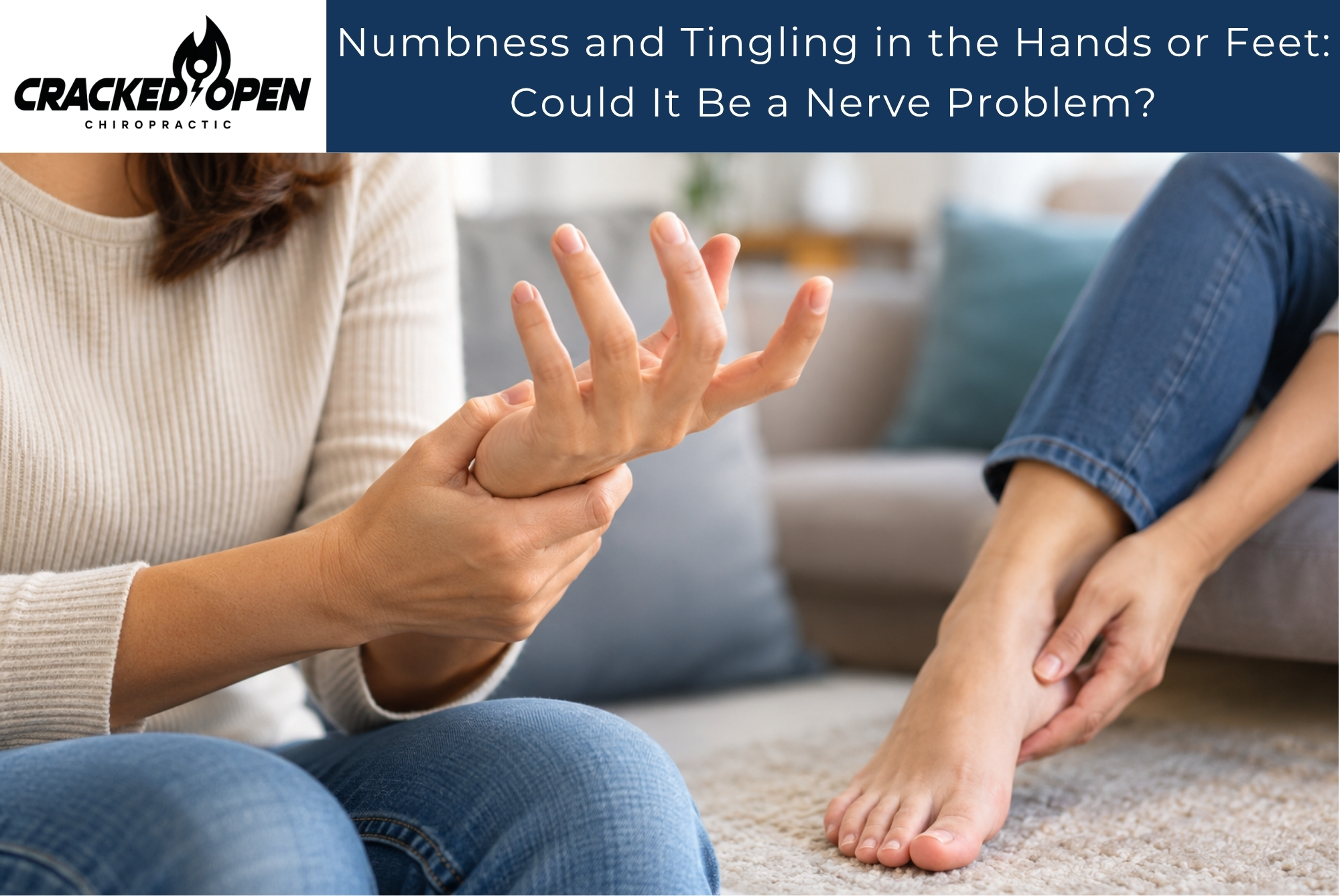
 Most people have experienced a hand or foot “falling asleep” after sitting or lying in an awkward position. The temporary pins-and-needles sensation usually disappears once you move. But what if numbness or tingling keeps coming back, lasts longer than expected, or occurs along with neck, back, arm, or leg pain?
Persistent numbness and tingling can sometimes indicate that a nerve is irritated, compressed, or otherwise affected. Because these sensations can have many possible causes, determining where they are coming from is important before deciding how to address them.
At Cracked Open Chiropractic in Longmont, CO, patients with musculoskeletal and nerve-related symptoms can be evaluated to identify factors that may be contributing to their discomfort and determine whether chiropractic or other conservative care may be appropriate.
What Causes Numbness and Tingling?
Numbness and tingling are sensations associated with the nervous system. When a nerve is temporarily compressed—for example, when you sit with your legs crossed for too long—you may experience a short-lived pins-and-needles sensation.
Recurring or persistent symptoms can have many possible causes, including:
- Nerve compression or irritation
- A pinched nerve
- Disc-related conditions
- Carpal tunnel syndrome
- Sciatica
- Repetitive movements
- Injuries
- Certain medical conditions
- Peripheral neuropathy
The location and pattern of your symptoms can sometimes provide clues about which nerves or structures may be involved.
What Does a Pinched Nerve Feel Like?
A pinched or irritated nerve can cause more than pain.
Depending on the location and severity of the problem, symptoms may include:
- Numbness
- Tingling
- Pins-and-needles sensations
- Burning discomfort
- Sharp or shooting pain
- Pain that travels into an arm or leg
- Changes in sensation
- Muscle weakness
Symptoms may be constant or may become more noticeable during certain movements or positions.
Can a Pinched Nerve in the Neck Cause Tingling in the Hands?
Yes. Nerves that exit the cervical spine in the neck travel into the shoulders, arms, and hands.
When one of these nerves becomes irritated or compressed, symptoms may be experienced farther along the nerve rather than only in the neck.
This can result in symptoms such as pain, numbness, tingling, or weakness affecting an arm, hand, or fingers.
Because conditions affecting the wrist, elbow, shoulder, or other areas can produce similar symptoms, determining where the nerve is being affected is an important part of the evaluation.
Can a Lower Back Problem Cause Numbness or Tingling in the Feet?
It can.
Nerves originating in the lower spine travel through the pelvis and legs toward the feet. Irritation or compression of these nerves can sometimes produce symptoms that extend from the lower back or buttock into the leg, ankle, or foot.
A person may experience tingling in the foot even when the underlying problem originates farther up the nerve pathway.
Could Tingling in My Leg Be Sciatica?
Sciatica describes symptoms associated with irritation or compression involving the sciatic nerve or its contributing nerve roots.
Symptoms commonly affect one side and may travel from the lower back or buttock into the thigh, calf, or foot.
Sciatica can include:
- Shooting or radiating pain
- Burning sensations
- Numbness
- Tingling
- Muscle weakness
Not every case of leg tingling is sciatica, however. An evaluation can help determine whether the sciatic nerve or another condition is responsible.
Can a Herniated Disc Cause Numbness and Tingling?
Yes. A bulging or herniated disc can sometimes affect a nearby spinal nerve.
If this occurs in the neck, symptoms may extend into an arm or hand. If it occurs in the lower back, symptoms may travel into a leg or foot.
Disc abnormalities do not always produce symptoms, so imaging findings alone do not necessarily explain what a patient is experiencing. Your symptoms, examination findings, medical history, and any imaging studies should be considered together.
Is Tingling in the Hands Always Carpal Tunnel Syndrome?
No.
Carpal tunnel syndrome is one possible cause of numbness and tingling in the hand, particularly when certain fingers are affected. However, nerve irritation can occur at different locations along the pathway from the neck to the hand.
Symptoms may also originate from other medical or musculoskeletal conditions.
If hand tingling repeatedly returns, identifying where the nerve may be affected can help guide appropriate care.
Can Poor Posture Cause Numbness and Tingling?
Posture alone should not automatically be blamed for neurological symptoms, but prolonged or repetitive positions may contribute to musculoskeletal stress and can aggravate some existing conditions.
For example, spending hours leaning toward a computer screen or looking down at a phone can place sustained demands on the neck and surrounding tissues.
If symptoms regularly occur while working at a desk, driving, or using electronic devices, your posture, workstation, and movement habits may be factors worth evaluating.
Why Do My Hands Go Numb at Night?
Nighttime numbness can occur for several reasons.
Sleeping positions may place temporary pressure on a nerve, wrist, elbow, shoulder, or neck. Certain nerve compression conditions can also become more noticeable at night.
If you frequently wake because your hands are numb or tingling, particularly if the symptoms persist during the day, consider having the problem evaluated rather than continually changing sleeping positions without knowing the cause.
Why Do My Feet Keep Tingling?
Persistent or recurring tingling in the feet can have neurological, musculoskeletal, metabolic, circulatory, or other medical causes.
Because not all foot tingling originates from the spine, persistent symptoms should not automatically be assumed to be a chiropractic problem.
A proper evaluation can help determine whether the symptoms appear musculoskeletal or whether referral to another healthcare provider may be appropriate.
Can Chiropractic Care Help Numbness and Tingling?
Whether chiropractic care is appropriate depends on why the numbness or tingling is occurring.
When symptoms are associated with certain musculoskeletal conditions involving the spine, joints, or surrounding tissues, conservative care may be considered.
At Cracked Open Chiropractic in Longmont, the first step is evaluating the patient’s symptoms and potential contributing factors. Treatment recommendations can then be individualized rather than treating every case of numbness or tingling in the same way.
What Treatments May Be Considered?
Treatment depends on the underlying condition and the individual patient.
When appropriate, a conservative treatment plan may incorporate approaches such as:
- Chiropractic care
- Corrective exercises
- Mobility work
- Soft tissue techniques
- Activity modifications
- Ergonomic recommendations
- Spinal decompression when clinically appropriate
- Other supportive therapies
If symptoms suggest a condition that requires evaluation outside the chiropractic setting, referral for additional medical assessment may be recommended.
When Should Numbness and Tingling Be Evaluated?
Consider having numbness or tingling evaluated when it:
- Happens repeatedly
- Does not resolve
- Is becoming more frequent
- Spreads into another area
- Occurs with neck or back pain
- Interferes with sleep
- Makes normal activities difficult
- Is accompanied by weakness
New or rapidly worsening neurological symptoms deserve particular attention.
When Is Numbness or Tingling an Emergency?
Some neurological symptoms require immediate medical attention.
Seek emergency medical care for sudden numbness or weakness—especially when it affects one side of the body or occurs with facial drooping, difficulty speaking, confusion, severe headache, dizziness, or difficulty walking.
Prompt medical care is also important for significant or worsening weakness, loss of bowel or bladder control, numbness in the groin or saddle region, or neurological symptoms following significant trauma.
Frequently Asked Questions About Numbness and Tingling
Does Numbness Always Mean Nerve Damage?
No. Temporary nerve compression can cause numbness without permanent nerve damage. Persistent symptoms, however, should be evaluated to determine why they are occurring.
What’s the Difference Between Numbness and Tingling?
Numbness generally describes reduced or absent sensation, while tingling often feels like pins and needles, prickling, buzzing, or similar unusual sensations. They can occur separately or together.
Why Do I Have Tingling Without Pain?
Nerve-related symptoms do not always include pain. Some people primarily experience numbness, tingling, burning, altered sensation, or weakness.
Can Neck Problems Affect My Fingers?
Yes. Nerves originating in the neck contribute to sensation and muscle function in the arms and hands. Certain cervical spine problems can therefore produce symptoms that extend into the fingers.
Can Lower Back Problems Affect My Toes?
They can. Nerves originating in the lower spine travel into the legs and feet. Depending on which nerve is affected, symptoms may sometimes reach the toes.
Can Spinal Decompression Help Nerve-Related Symptoms?
Spinal decompression may be considered for certain spinal conditions associated with nerve irritation, but it is not appropriate for every cause of numbness or tingling. An evaluation is necessary to determine whether decompression is suitable for the individual patient.
Should I Stretch if My Hands or Feet Are Tingling?
It is better to identify the source of persistent neurological symptoms before aggressively stretching or attempting exercises found online. A movement that is appropriate for one condition may aggravate another.
When Should I See a Chiropractor for Numbness and Tingling?
If recurring numbness or tingling occurs alongside neck pain, back pain, radiating discomfort, stiffness, or other musculoskeletal symptoms, a chiropractic evaluation may help determine whether a musculoskeletal problem is contributing. Symptoms that suggest another medical cause may require referral to an appropriate healthcare provider.
Care for Numbness and Tingling in Longmont, CO
Recurring pins and needles may seem like a minor annoyance, but persistent numbness or tingling should not simply be ignored.
The symptoms may originate in the area where you feel them, or they may be related to a nerve farther along its pathway.
At Cracked Open Chiropractic in Longmont, Colorado, patients can receive an individualized evaluation to help determine whether a musculoskeletal or spinal condition may be contributing to their symptoms and which conservative treatment options may be appropriate.
If numbness, tingling, radiating discomfort, neck pain, or back pain is interfering with your daily activities, schedule an appointment to have your symptoms evaluated.
Contact Information
Cracked Open Chiropractic
1823 Sunset Place, Ste F
Longmont, CO 80501
Phone: (303) 776-6596
Website: crackedopenchiropractic.com
Book An Appointment: crackedopenchiropractic.com/appointments/