
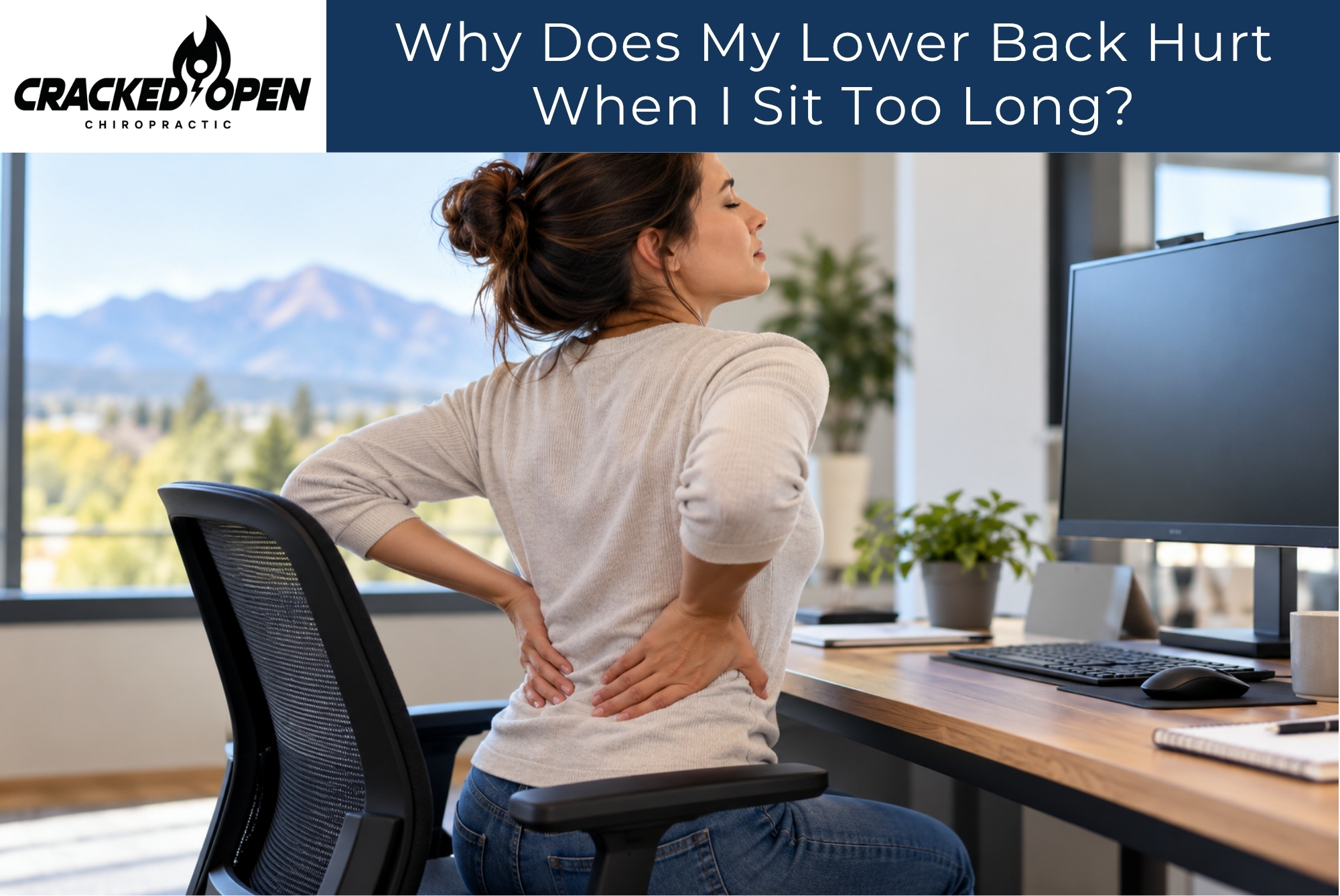
Sitting may seem like a harmless activity, but spending hours at a desk, behind the wheel, or on the couch can take a toll on your lower back. If you notice stiffness, aching, or discomfort after sitting for an extended period, your body may be telling you that your posture, muscles, joints, or spine need attention.
At Cracked Open Chiropractic in Longmont, CO, we help patients identify factors that may be contributing to back discomfort and develop individualized approaches designed to improve movement, function, and overall spinal health.
Why Can Sitting Cause Lower Back Pain?
When you sit for long periods, your body remains in one position while certain muscles work continuously and others become less active. Depending on your posture and workstation setup, sitting may also increase stress on structures in the lower back.
Slouching, leaning forward, crossing your legs, or sitting without adequate lumbar support can contribute to discomfort over time.
Lower back pain after sitting may be associated with factors such as:
- Poor posture
- Muscle tightness
- Muscle weakness or imbalance
- Limited hip mobility
- Prolonged inactivity
- Improper desk or chair ergonomics
- Irritation of spinal joints or surrounding tissues
- Disc-related problems
Because several issues can produce similar symptoms, determining the source of recurring back pain is an important first step.
Can Poor Posture Cause Lower Back Pain?
Posture can play an important role in how your back feels after a long day.
When you consistently sit in a slouched or unsupported position, the muscles and other structures surrounding the spine may be placed under additional strain. You may initially notice only mild stiffness, but discomfort can become more noticeable when the same habits are repeated day after day.
Rather than trying to maintain one “perfect” position all day, changing positions regularly and incorporating movement into your routine can be beneficial.
Why Does My Back Hurt When I Stand Up After Sitting?
If your lower back feels particularly stiff when you first get out of a chair, prolonged inactivity may be one contributing factor.
Your hips, lower back, and surrounding muscles have remained relatively stationary while you were seated. Standing suddenly requires these areas to move and support your body differently.
For some people, the discomfort improves after walking around. Persistent or worsening pain, however, may warrant an evaluation.
Could Tight Hips Be Contributing to My Back Pain?
Your hips and lower back work together during everyday movements.
Long periods of sitting can contribute to tightness around the hips. When hip mobility is limited, other areas of the body may compensate during standing, walking, bending, or exercising.
Improving mobility and addressing muscle imbalances may therefore be an important part of managing certain types of lower back discomfort.
Could My Desk Setup Be Making My Back Hurt?
Your workstation can make a significant difference, especially if you spend most of the workday sitting.
Consider the position of your chair, desk, keyboard, and computer monitor. Your setup should allow you to work comfortably without constantly leaning, reaching, twisting, or looking downward.
A supportive chair and properly positioned workstation can help reduce unnecessary strain, but even an ergonomic setup does not eliminate the need for regular movement.
How Often Should I Get Up From My Desk?
Try to avoid staying in the same position for hours at a time.
Short movement breaks throughout the day can give your muscles and joints an opportunity to change positions. Standing, walking briefly, or performing gentle movements may help reduce the stiffness associated with prolonged sitting.
The goal is not simply to replace sitting all day with standing all day. Regular movement and variation are key.
Can Chiropractic Care Help With Lower Back Pain?
Chiropractic care may be one component of a conservative approach to certain types of mechanical lower back pain.
At Cracked Open Chiropractic in Longmont, care can be tailored to the patient’s symptoms, examination findings, lifestyle, and individual needs. Depending on the situation, a treatment plan may incorporate chiropractic care alongside supportive therapies, corrective exercises, mobility work, or recommendations for modifying activities that contribute to discomfort.
Not every case of lower back pain has the same cause, which is why an individualized evaluation is important.
What Can I Do at Home to Reduce Back Pain From Sitting?
Small changes throughout your day may make sitting more comfortable.
Consider:
- Changing positions frequently
- Taking regular walking and movement breaks
- Using appropriate lumbar support
- Adjusting your monitor and workstation
- Avoiding prolonged slouching
- Incorporating appropriate stretching and mobility exercises
- Staying physically active outside of work
- Following exercises recommended specifically for your needs
If an activity or exercise increases your pain, stop and discuss your symptoms with an appropriate healthcare professional.
When Should I Be Concerned About Lower Back Pain?
Back pain is common, but certain symptoms require prompt medical attention.
Seek medical care if lower back pain occurs with symptoms such as significant weakness, loss of bowel or bladder control, numbness around the groin or saddle region, fever, unexplained weight loss, or pain following a significant injury.
You should also consider having recurring pain evaluated if it is interfering with sleep, work, exercise, or normal daily activities.
Frequently Asked Questions About Lower Back Pain From Sitting
Why Does My Lower Back Hurt After Sitting but Feel Better When Walking?
Movement changes the demands placed on your muscles and joints. If prolonged sitting contributes to stiffness or muscular tension, walking may temporarily make you feel better by getting your body moving again. Recurring symptoms should still be evaluated to determine what may be contributing to them.
Is Sitting or Standing Better for Lower Back Pain?
Neither position is necessarily ideal for an entire day. Alternating between sitting, standing, and moving is generally preferable to remaining in one position for prolonged periods.
Can a Bad Office Chair Cause Back Pain?
An unsupportive or poorly adjusted chair can contribute to uncomfortable sitting positions. However, your chair is only one factor. Workstation setup, posture, movement habits, physical conditioning, and underlying musculoskeletal issues may also influence symptoms.
Why Does My Lower Back Hurt After Driving?
Driving combines prolonged sitting with limited movement. Seat position and posture may also contribute to discomfort. Adjusting your seat and taking movement breaks during longer trips may help.
Can a Herniated Disc Cause Pain While Sitting?
Disc-related conditions can cause lower back symptoms, and some people find certain seated positions uncomfortable. However, back pain while sitting does not automatically mean you have a herniated disc. An evaluation is necessary to determine the likely source of your symptoms.
Should I Stretch My Lower Back if Sitting Causes Pain?
Appropriate mobility exercises can be helpful for some people, but the best exercises depend on the cause of the symptoms. Stretching aggressively or repeatedly performing movements that worsen pain may be counterproductive.
When Should I See a Chiropractor for Lower Back Pain?
If your discomfort keeps returning, is getting worse, or is affecting your daily activities, consider having it evaluated. A chiropractor can assess musculoskeletal factors that may be contributing to your symptoms and determine whether chiropractic care is appropriate for your situation.
Chiropractic Care for Lower Back Pain in Longmont, CO
If sitting through your workday leaves your lower back aching or stiff, you do not have to simply accept discomfort as part of having a desk job.
Cracked Open Chiropractic provides chiropractic care in Longmont, Colorado, with an individualized approach focused on helping patients improve movement, function, and spinal health.
Schedule an appointment to discuss your symptoms and learn which treatment options may be appropriate for you.
Contact Information
Cracked Open Chiropractic
1823 Sunset Place, Ste F
Longmont, CO 80501
Phone: (303) 776-6596
Website: crackedopenchiropractic.com
Book An Appointment: crackedopenchiropractic.com/appointments/