
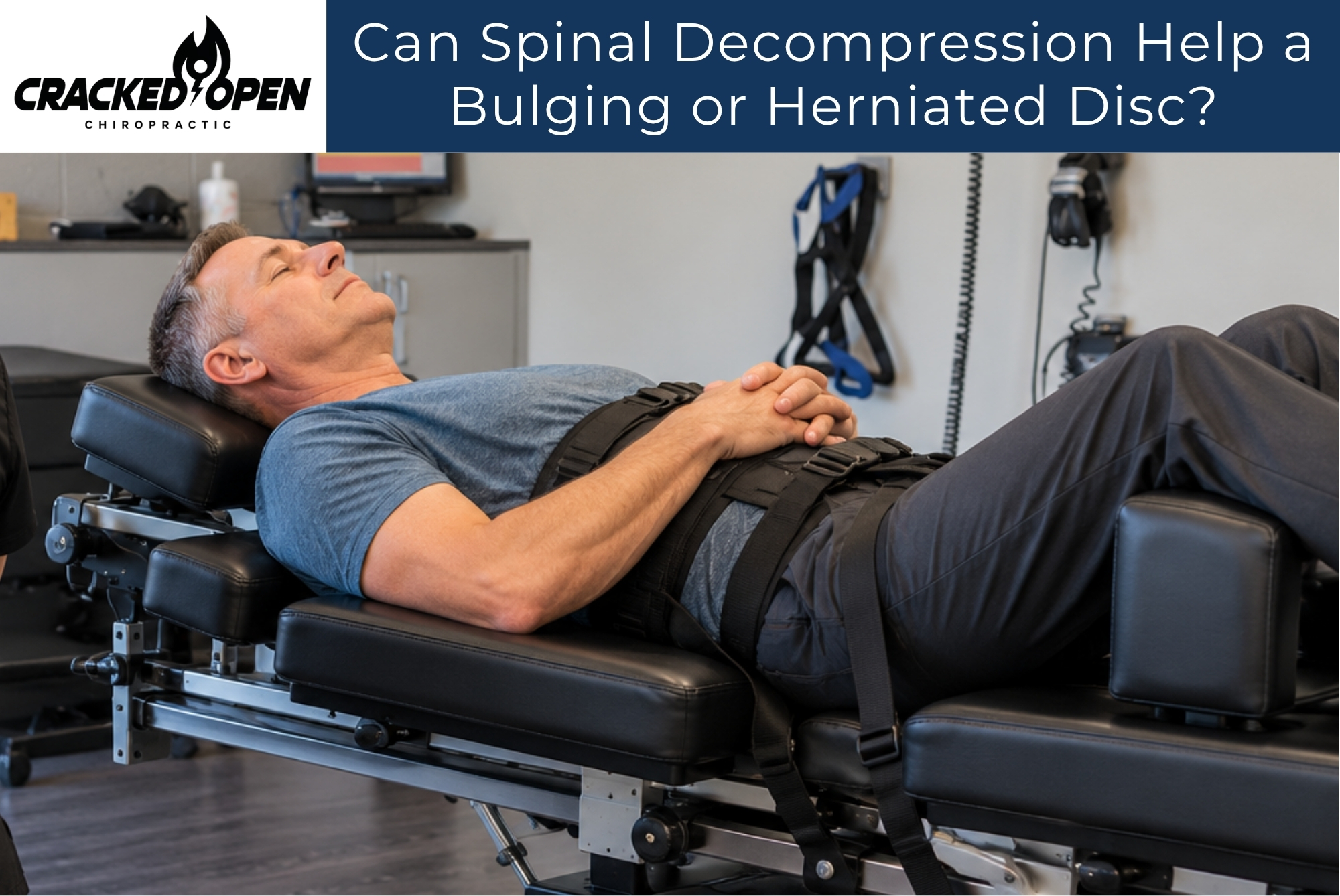
 A bulging or herniated disc can cause more than just back or neck pain. Depending on its location and whether nearby nerves are irritated, disc problems may also contribute to pain that travels into an arm or leg, numbness, tingling, or other uncomfortable symptoms.
If you have been diagnosed with a disc problem, you may be looking for conservative treatment options before considering more invasive approaches. Non-surgical spinal decompression is one option that may be appropriate for certain patients with disc-related conditions.
At Cracked Open Chiropractic in Longmont, CO, spinal decompression can be incorporated into an individualized treatment plan based on your symptoms, examination findings, and overall condition.
What Are Spinal Discs?
Between the vertebrae of your spine are flexible structures called intervertebral discs. These discs help absorb forces placed on the spine and allow the spinal column to move.
Each disc has a tougher outer layer surrounding a softer, gel-like center.
Over time, repetitive stress, injuries, age-related changes, and other factors can affect the structure of a disc. In some cases, the disc may begin to bulge or the inner material may push through a damaged portion of the outer layer.
What Is a Bulging Disc?
A bulging disc occurs when part of the disc extends beyond its normal boundary.
Not every bulging disc causes symptoms. Some people have disc changes without experiencing significant pain.
However, symptoms may develop when a disc or associated inflammation affects nearby structures, including spinal nerves.
What Is a Herniated Disc?
A herniated disc occurs when material from inside the disc pushes through a weakened or damaged area of its outer layer.
Like a bulging disc, a herniated disc does not necessarily cause symptoms in every person.
When nearby nerves become irritated or compressed, however, symptoms may occur in the neck or back and can sometimes travel into the arms or legs.
What Is the Difference Between a Bulging Disc and a Herniated Disc?
Although the terms are sometimes used interchangeably, they describe different types of disc changes.
A bulging disc generally involves a broader portion of the disc extending outward. A herniated disc typically involves a more localized area where inner disc material extends through the outer portion of the disc.
The severity of symptoms does not necessarily correspond with how dramatic a disc looks on imaging. The location of the disc problem, involvement of surrounding tissues, and individual patient factors all matter.
What Are the Symptoms of a Bulging or Herniated Disc?
Symptoms can vary depending on which part of the spine is affected.
Possible symptoms include:
- Neck or lower back pain
- Stiffness
- Pain that travels into an arm or leg
- Numbness
- Tingling or pins-and-needles sensations
- Burning discomfort
- Muscle weakness
- Pain that worsens with certain movements or positions
- Difficulty performing normal activities
Some disc problems cause primarily localized discomfort, while others produce neurological symptoms because a nearby nerve is involved.
Can a Herniated Disc Cause Sciatica?
Yes. A disc problem in the lower spine can sometimes irritate or compress a nerve root associated with the sciatic nerve.
This may result in symptoms that travel from the lower back or buttock into the leg.
Sciatica may involve pain, burning, numbness, tingling, or weakness. Because several conditions can cause similar symptoms, an evaluation is important for determining what is contributing to the problem.
What Is Non-Surgical Spinal Decompression?
Non-surgical spinal decompression is a conservative therapy that uses a specialized table or device to apply controlled distraction to the spine.
Treatment is designed to gently alter forces within targeted areas of the spinal column.
Rather than using the same approach for everyone, decompression settings and treatment recommendations should be based on the patient’s condition and clinical findings.
How Does Spinal Decompression Work?
During spinal decompression, controlled forces are applied to targeted areas of the spine.
The goal is to reduce mechanical stress on certain spinal structures and create an environment that may help relieve symptoms in appropriately selected patients.
Spinal decompression is different from simply hanging, stretching, or attempting to “decompress” your own spine at home. Professional equipment allows the treatment to be controlled and adjusted for the individual patient.
Can Spinal Decompression Help a Bulging Disc?
Spinal decompression may be considered as part of conservative treatment for certain patients with bulging discs.
Whether it is appropriate depends on factors such as:
- Where the affected disc is located
- The patient’s symptoms
- Whether neurological symptoms are present
- Overall spinal health
- Medical history
- Physical examination findings
- Other conditions that may be contributing to the pain
Having a bulging disc does not automatically mean spinal decompression is appropriate, which is why an evaluation should come first.
Can Spinal Decompression Help a Herniated Disc?
Some patients with herniated discs may also be candidates for non-surgical spinal decompression.
The goal is not to promise that decompression will “fix” every herniated disc. Instead, the therapy may be incorporated into a broader conservative treatment plan designed to address pain, mobility, function, and contributing musculoskeletal factors.
The appropriate approach depends on the individual.
Is Spinal Decompression Painful?
Spinal decompression is intended to be a controlled treatment.
Patients may experience different sensations depending on their condition and sensitivity. Treatment settings can be adjusted according to individual needs and response.
If something feels uncomfortable during treatment, patients should communicate that to their provider.
How Many Spinal Decompression Treatments Will I Need?
There is no universal number of treatments appropriate for every patient.
Recommendations may depend on:
- The nature of the condition
- How long symptoms have been present
- Severity of symptoms
- Overall health
- Treatment response
- Activity level
- Other therapies being used
Your progress should be monitored throughout care so recommendations can be adjusted when appropriate.
Is Spinal Decompression the Same as Chiropractic Adjustment?
No. They are different forms of treatment.
Spinal decompression uses controlled distraction or traction, while chiropractic adjustments involve specific techniques intended to address joint mobility and function.
Depending on the patient’s needs, spinal decompression may be used alongside chiropractic care and other supportive therapies.
Can Spinal Decompression Be Combined With Other Treatments?
Yes. Depending on the patient’s condition, a comprehensive treatment plan may include more than one approach.
At Cracked Open Chiropractic in Longmont, care may incorporate spinal decompression along with chiropractic care, corrective exercises, soft tissue techniques, or other supportive therapies when appropriate.
Combining therapies allows treatment to address different factors that may be contributing to pain and limited function.
Who May Not Be a Candidate for Spinal Decompression?
Spinal decompression is not appropriate for every patient or every spinal condition.
Certain medical conditions, significant spinal instability, some fractures, certain surgical histories, pregnancy, or other health considerations may affect whether decompression is appropriate.
A thorough medical history and evaluation are therefore important before beginning treatment.
When Does a Herniated Disc Require Medical Attention?
Seek prompt medical evaluation if back or neck pain is accompanied by significant or worsening muscle weakness, loss of bowel or bladder control, numbness around the groin or saddle region, severe symptoms following significant trauma, or other concerning neurological changes.
These symptoms should not be managed solely with home care.
Frequently Asked Questions About Spinal Decompression and Disc Problems
Can a Bulging Disc Heal Without Surgery?
Many disc-related conditions are initially managed conservatively, depending on the patient’s symptoms and clinical findings. Whether surgery is necessary depends on the specific condition, severity of neurological involvement, response to conservative treatment, and other individual factors.
Does a Bulging Disc Always Cause Pain?
No. Disc changes can sometimes be found on imaging in people who have no symptoms. Imaging findings need to be considered together with the patient’s symptoms and physical examination.
Can a Herniated Disc Cause Numbness and Tingling?
Yes. If a herniated disc irritates or compresses a nearby nerve, symptoms can include numbness, tingling, burning, or changes in sensation.
Can Spinal Decompression Help Sciatica?
It may be considered for certain patients when sciatica symptoms are associated with a condition for which decompression is appropriate. Because sciatica can have different underlying causes, identifying the source of the symptoms is important.
Is Spinal Decompression Surgery?
No. Non-surgical spinal decompression does not involve an incision or surgical procedure.
Can I Do Spinal Decompression at Home?
Products and exercises marketed as “at-home decompression” are not equivalent to professionally administered spinal decompression. Attempting aggressive traction without knowing the cause of your symptoms may not be appropriate.
How Do I Know if Spinal Decompression Is Right for Me?
The best way to determine whether you may be a candidate is to have your symptoms and health history evaluated. Your provider can assess whether decompression is appropriate or whether another treatment approach should be considered.
Do I Need an MRI Before Spinal Decompression?
Not every patient automatically requires an MRI. The need for imaging depends on your symptoms, medical history, examination findings, previous diagnoses, and other clinical factors.
Spinal Decompression in Longmont, CO
Living with persistent back pain, neck pain, sciatica, or symptoms associated with a bulging or herniated disc can interfere with work, exercise, sleep, and everyday activities.
If you’re interested in exploring conservative options, Cracked Open Chiropractic in Longmont, Colorado offers non-surgical spinal decompression as part of its approach to musculoskeletal and spinal care.
An evaluation can help determine what may be contributing to your symptoms and whether spinal decompression should be included in your individualized treatment plan.
Contact Information
Cracked Open Chiropractic
1823 Sunset Place, Ste F
Longmont, CO 80501
Phone: (303) 776-6596
Website: crackedopenchiropractic.com
Book An Appointment: crackedopenchiropractic.com/appointments/