
 Tight muscles can make everyday movements uncomfortable. Your neck may feel stiff after hours at a computer, your shoulders may remain tense even after stretching, or your lower back may feel tight every time you stand after sitting. Sometimes these symptoms improve temporarily with rest or massage only to return again.
When muscle and connective tissue restrictions contribute to pain or limited movement, myofascial release may be incorporated into a conservative treatment plan.
At Cracked Open Chiropractic in Longmont, CO, myofascial release can be used alongside chiropractic care, corrective exercises, and other supportive therapies when appropriate for the individual patient.
What Is Myofascial Release?
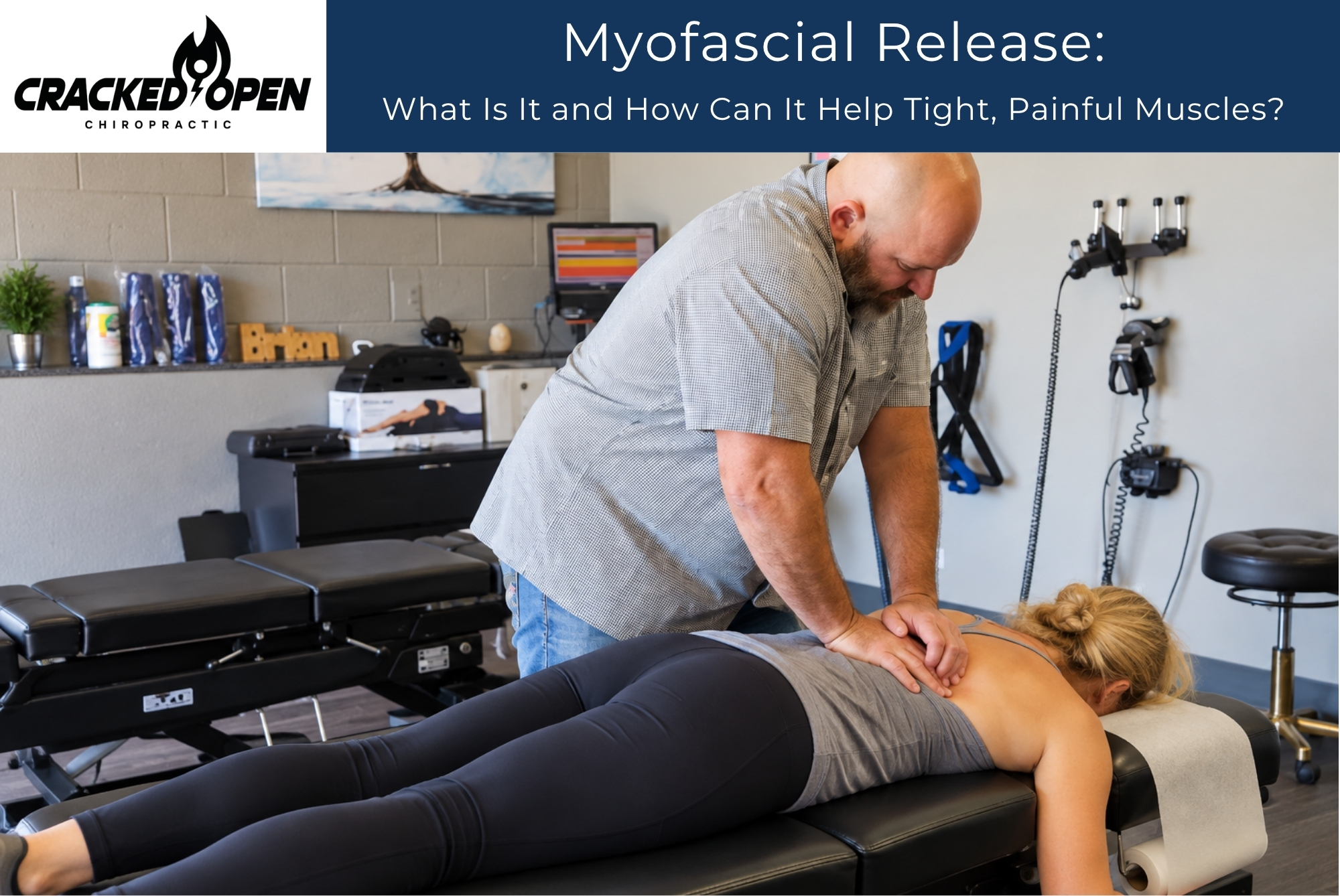
Myofascial release is a hands-on technique used to address areas of muscle and connective tissue tension or restriction.
The term “myofascial” refers to muscles and fascia. Fascia is connective tissue that surrounds and supports muscles and many other structures throughout the body.
When muscles and surrounding tissues become tight, irritated, or restricted, normal movement may become uncomfortable.
Myofascial techniques are intended to address these soft tissues as part of an overall approach to improving mobility and function.
What Is Fascia?
Fascia is connective tissue found throughout the body.
Rather than thinking of muscles as completely separate structures, fascia helps form an interconnected network surrounding and supporting muscles, nerves, blood vessels, and other tissues.
Like other connective tissues, fascia responds to movement, physical stress, injury, and other factors.
Why Do Muscles Become Tight?
Muscles can feel tight for many reasons.
Possible contributing factors include:
- Repetitive activities
- Prolonged sitting
- Physical work
- Exercise
- Previous injuries
- Muscle fatigue
- Limited mobility
- Stress
- Changes in movement patterns
- Spending long periods in one position
Muscle tightness does not necessarily mean that a muscle simply needs to be stretched. In some cases, the sensation of tightness may be associated with weakness, irritation, joint restrictions, or other factors.
What Does Myofascial Pain Feel Like?
Soft tissue discomfort can present differently from person to person.
You may experience:
- Aching
- Muscle tightness
- Tender areas
- Stiffness
- Restricted movement
- Discomfort during certain activities
- A feeling that a muscle will not relax
Because nerve, joint, disc, and other conditions can produce overlapping symptoms, persistent pain should be evaluated rather than automatically assumed to be muscular.
How Does Myofascial Release Work?
Myofascial release techniques involve applying controlled pressure or movement to targeted soft tissues.
The technique and amount of pressure can vary depending on the treatment area, patient’s tolerance, and clinical goals.
Treatment may focus on helping improve soft tissue mobility and reducing restrictions that may be contributing to uncomfortable movement.
Myofascial release should be individualized rather than performed aggressively simply because an area feels tight.
Is Myofascial Release the Same as Massage?
They can share certain hands-on techniques, but myofascial release and general massage are not necessarily the same.
Massage may be used for relaxation, muscle soreness, or general wellness. Myofascial techniques used in a clinical setting may be directed toward specific areas identified during an evaluation.
At a chiropractic practice, soft tissue treatment may also be integrated with other therapies intended to address movement and musculoskeletal function.
What Areas Can Myofascial Release Be Used On?
Depending on the patient’s condition, soft tissue techniques may be used around areas such as the:
- Neck
- Shoulders
- Upper back
- Lower back
- Hips
- Arms
- Legs
The painful area is not always the only area that needs to be evaluated. Movement involves multiple muscles and joints working together.
Can Myofascial Release Help Neck Tightness?
Myofascial techniques may be considered when soft tissue tension contributes to neck discomfort or restricted movement.
Neck tightness is common among people who spend significant time working at computers, driving, using mobile devices, or performing repetitive activities.
However, persistent neck pain can also involve joints, discs, nerves, or other structures. An evaluation can help determine whether muscle and fascial restrictions appear to be part of the problem.
Can Myofascial Release Help Shoulder Pain?
Shoulder movement depends on coordinated function between the shoulder joint, shoulder blade, upper back, neck, and surrounding muscles.
When soft tissue restrictions contribute to limited movement or discomfort, myofascial release may be incorporated into care.
Corrective exercises or other therapies may also be recommended to address mobility, strength, or movement patterns.
Can Myofascial Release Help Lower Back Tightness?
Lower back tightness can be associated with prolonged sitting, repetitive activities, exercise, physical work, or other musculoskeletal factors.
Soft tissue treatment may help address muscular components of certain lower back complaints.
However, lower back symptoms can also involve joints, discs, nerves, hips, and other structures. Persistent back pain should therefore be evaluated rather than treated solely as muscle tightness.
Can Tight Hips Contribute to Back Pain?
The hips, pelvis, and lower back work together during standing, walking, bending, and many other activities.
If hip mobility is limited or certain muscles are not functioning efficiently, surrounding areas may compensate.
For some patients, treatment may therefore include addressing both the area that hurts and other regions that influence how the body moves.
Can Myofascial Release Help After Exercise?
Exercise can leave muscles temporarily sore or tight, particularly after a new or demanding workout.
Soft tissue treatment may be incorporated into a recovery plan for certain patients, but normal post-exercise soreness and an actual injury are not necessarily the same.
Pain that is sharp, progressively worsening, associated with significant swelling, or repeatedly triggered by the same activity may deserve further evaluation.
Can Myofascial Release Improve Range of Motion?
When soft tissue restrictions contribute to limited movement, addressing those tissues may help support improved mobility.
However, range of motion can also be affected by joint problems, injuries, neurological conditions, pain, and other factors.
For this reason, treatment may combine myofascial work with chiropractic care, mobility exercises, or corrective exercises rather than relying on soft tissue techniques alone.
Why Does Muscle Tightness Keep Coming Back?
If tightness repeatedly returns, the underlying issue may involve more than the muscle itself.
Potential contributing factors can include:
- Repetitive movement patterns
- Prolonged sitting
- Limited mobility
- Muscle weakness
- Workstation setup
- Physical workload
- Exercise technique
- Previous injury
- Inadequate recovery
Temporary relief can feel good, but identifying why the same area repeatedly becomes uncomfortable may provide a better foundation for longer-term management.
Can Myofascial Release Be Combined With Chiropractic Care?
Yes. When appropriate, myofascial release may complement chiropractic care.
Muscles, connective tissues, and joints work together during movement. Addressing multiple contributing factors may therefore be useful for certain patients.
At Cracked Open Chiropractic in Longmont, treatment recommendations are based on the patient’s individual symptoms, examination findings, and goals.
Can Myofascial Release Be Combined With Corrective Exercises?
Yes. This combination may be appropriate when soft tissue restrictions and movement limitations occur together.
Myofascial treatment may address soft tissue mobility, while corrective exercises may focus on factors such as:
- Strength
- Mobility
- Coordination
- Movement control
- Functional movement
The specific exercises should be selected according to the patient’s needs.
Does Myofascial Release Hurt?
Myofascial treatment may involve pressure on sensitive tissues, so some areas may feel tender.
However, treatment does not need to be extremely painful to be effective. More pressure is not automatically better.
Patients should communicate with their provider about their comfort level during treatment.
Will I Be Sore After Myofascial Release?
Some people may experience temporary tenderness or soreness after soft tissue treatment.
Your response can depend on the treatment intensity, area being treated, underlying condition, and individual sensitivity.
If you experience severe, unusual, or prolonged symptoms after treatment, contact your healthcare provider.
Can I Do Myofascial Release at Home?
Foam rollers, massage balls, and similar tools are commonly used for self-directed soft tissue work.
These tools may be appropriate for some people when used carefully. However, aggressively pressing on a painful area without understanding the cause of the symptoms may aggravate certain conditions.
Avoid applying intense pressure directly over areas that produce numbness, tingling, sharp pain, or other concerning symptoms.
When Should Muscle Pain Be Evaluated?
Consider having persistent muscle pain or tightness evaluated when it:
- Keeps returning
- Limits your range of motion
- Interferes with sleep
- Affects work or exercise
- Becomes progressively worse
- Does not improve with normal recovery
- Occurs with significant weakness
- Includes numbness or tingling
- Follows a significant injury
Seek prompt medical attention for severe pain following significant trauma, sudden significant weakness, substantial swelling or deformity, chest pain, difficulty breathing, or other concerning symptoms.
Frequently Asked Questions About Myofascial Release
How Is Myofascial Release Different From Stretching?
Stretching generally involves moving a muscle or joint through a position intended to lengthen tissues, while myofascial release uses targeted pressure or hands-on techniques. They may sometimes be used together as part of a treatment plan.
How Long Does Myofascial Release Take?
Treatment time varies depending on the area being addressed, the patient’s condition, and what other therapies are included during the visit.
How Many Myofascial Release Sessions Will I Need?
There is no universal number. Recommendations depend on your symptoms, examination findings, goals, response to treatment, and other factors contributing to the problem.
Can Myofascial Release Help With Knots?
People commonly use the term “muscle knot” to describe a tight or tender area within a muscle. Soft tissue techniques may be used to address certain areas of muscular tension, but recurring painful areas may require a broader evaluation.
Can Myofascial Release Help With Headaches?
When neck or upper-back muscle tension contributes to certain headache patterns, soft tissue techniques may be considered as part of care. Because headaches have many potential causes, recurring headaches should be appropriately evaluated.
Is Myofascial Release Good for Sciatica?
Sciatica involves nerve-related symptoms and can have different underlying causes. Myofascial techniques may be incorporated into a broader treatment plan for some patients, but they are not a universal treatment for sciatica.
Can Myofascial Release Help a Pinched Nerve?
That depends on what is causing the nerve irritation. Soft tissue treatment may address surrounding muscular factors in some cases, but persistent numbness, tingling, radiating pain, or weakness requires appropriate evaluation.
Should I Stretch After Myofascial Release?
Your provider may recommend specific mobility or stretching exercises depending on your condition. Avoid assuming that aggressive stretching is necessary after every treatment.
When Should I See a Chiropractor for Tight Muscles?
If muscle tightness repeatedly returns, restricts movement, causes pain, or occurs alongside neck, back, shoulder, or other musculoskeletal symptoms, a chiropractic evaluation may help identify contributing factors and determine whether myofascial release or other conservative therapies are appropriate.
Myofascial Release in Longmont, CO
Recurring muscle tightness can be frustrating, especially when stretching, rest, or temporary self-care provides only short-term relief.
Instead of focusing solely on the area that feels tight, an individualized evaluation can help identify other factors that may be influencing your symptoms and movement.
At Cracked Open Chiropractic in Longmont, Colorado, myofascial release may be incorporated alongside chiropractic care, corrective exercises, and other conservative therapies based on your individual needs.
If tight, painful muscles are limiting your movement or interfering with work, exercise, sleep, or everyday activities, schedule an appointment to learn which treatment options may be appropriate for you.
Contact Information
Cracked Open Chiropractic
1823 Sunset Place, Ste F
Longmont, CO 80501
Phone: (303) 776-6596
Website: crackedopenchiropractic.com
Book An Appointment: crackedopenchiropractic.com/appointments/